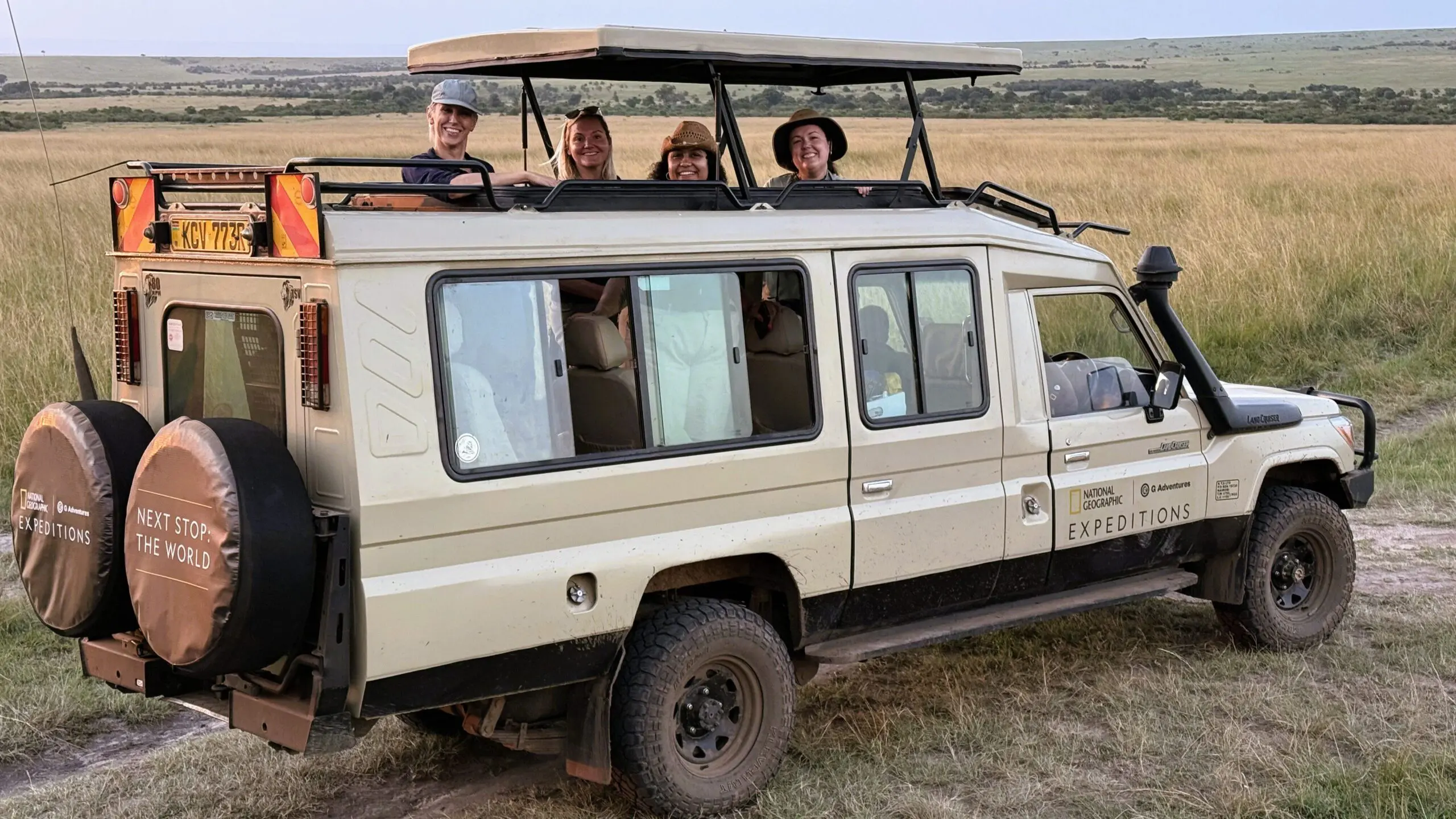

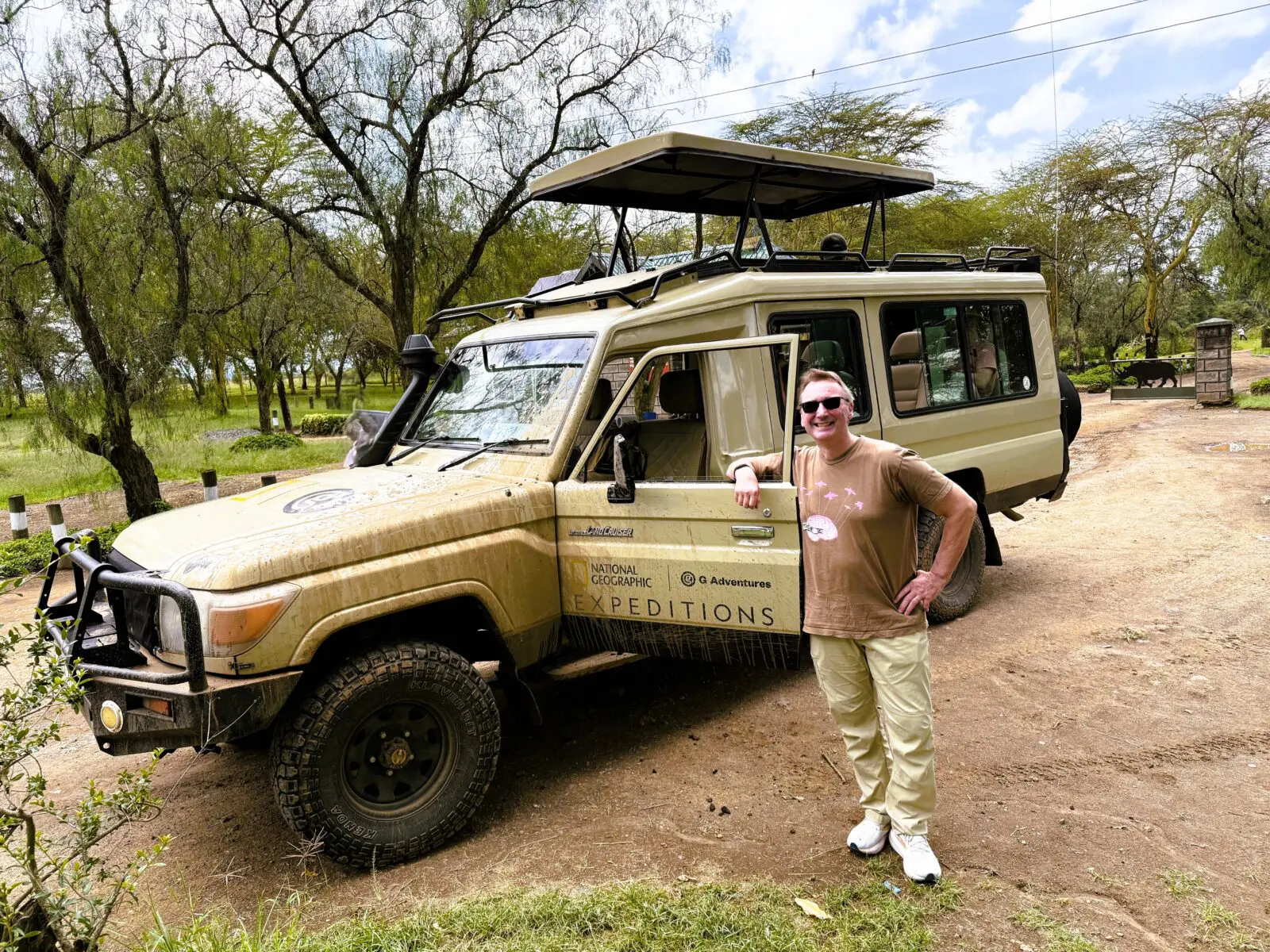
If you’d asked me what I wanted to be when I grew up, I’d have answered “National Geographic Photographer” without hesitation. My youth was surrounded by dusty stacks of yellow-bordered magazines. Every Sunday evening as a young adult, as my wife and I watched Explorer, I thought Boyd Matson had the best job in the world. For my PhD, I studied animal behavior and longed to get out of the lab to observe large game species in their natural habitat.
You can probably imagine how happy I was when National Geographic Expeditions invited me to join a National Geographic Journeys trip to experience a Kenya safari. (National Geographic Journeys are a collaboration between National Geographic Expeditions and G Adventures, a small-group adventure travel company focused on community tourism and using travel as a force for social good.)
I jumped at the chance to visit one of the most iconic wildlife destinations in the world with an organization I grew up admiring.
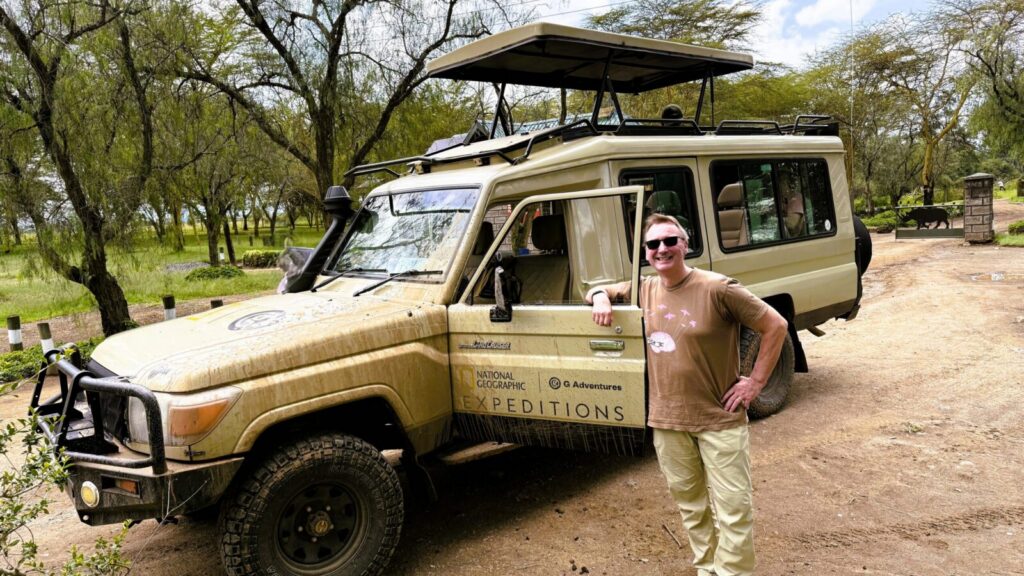
With a camera, zoom lens, and binoculars packed in my carry-on, I boarded Kenya Airways for a 15-hour, nonstop flight from New York City to Nairobi, Kenya. After landing, we met up with our tour leader, who gave us an overview of the trip, in which we’d spend the next week visiting national parks and reserves on the lookout for the African Big Five: lion, elephant, rhino, buffalo, and leopard. But, before I get into the details of that safari, let’s talk a little about National Geographic Journeys.
What is National Geographic Journeys?
National Geographic Journeys is one type of trip offered by National Geographic Expeditions, a branch of the organization that offers guided tours around the world and supports the work of National Geographic-sponsored explorers and researchers. Of course, National Geographic has a 130+ year history with a mission to educate society and illuminate and protect the wonders of our world.
National Geographic Expeditions is one way the organization advances their mission, and there are many different types of expeditions. These include Signature Land adventures, Expedition Cruises, Day Tours, Family Journeys, and Journeys.
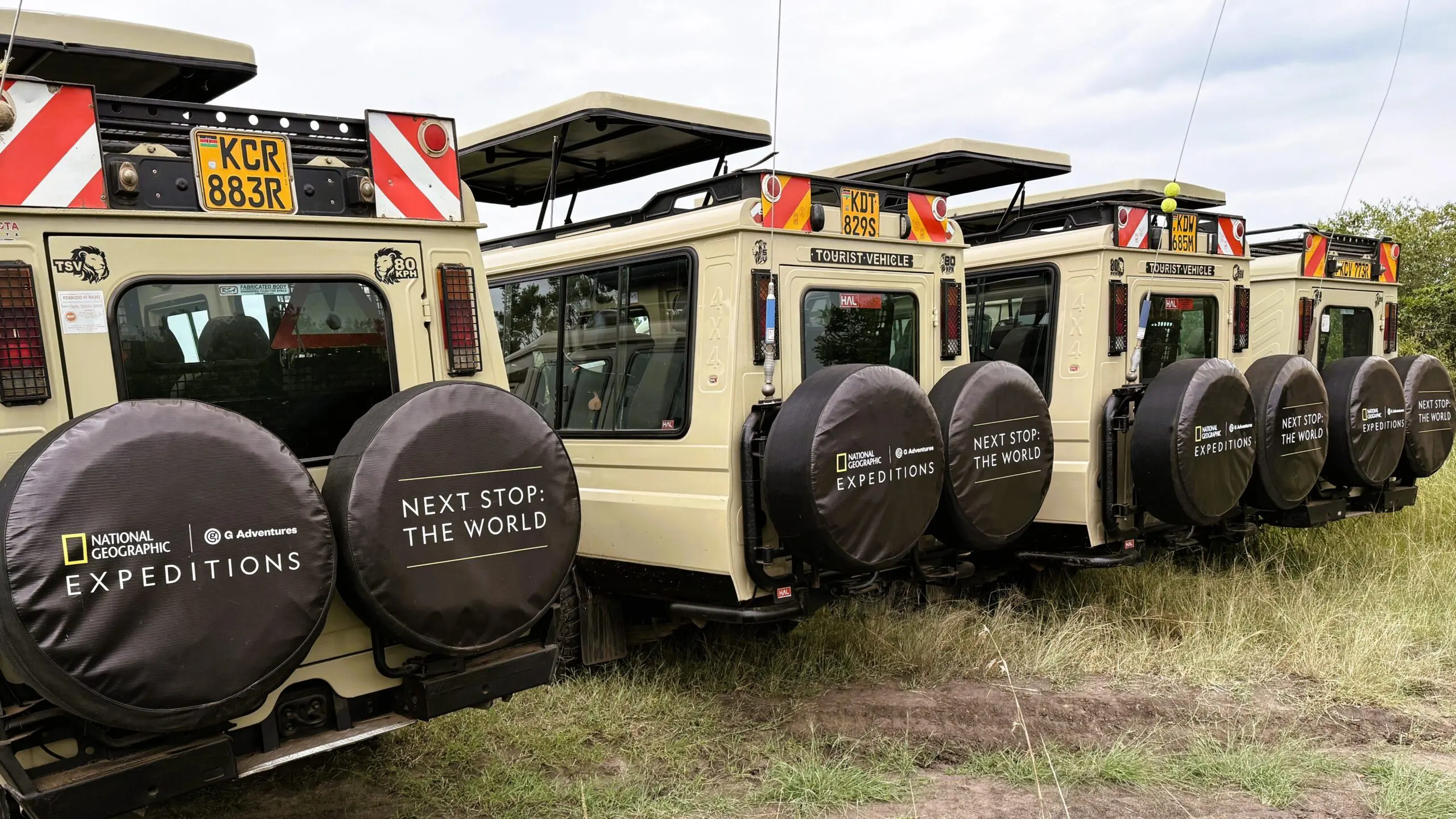
Both National Geographic and G Adventures are committed to similar goals of education, travel, and learning deeply about cultures, so it makes sense that National Geographic Journeys with G Adventures is a collection of small-group trips (fewer than 16 guests) that blends exploration, science, education, and storytelling with meaningful community and social impact.
What happens on a Kenya safari with National Geographic Journeys?
Starting in Nairobi, we met our local tour leader and the rest of our group. Typically, the maximum group size is six guests, the capacity of one 4×4 safari vehicle. Our guides and drivers were all from Kenya and had extensive experience with the destinations we visited. They taught us some useful Swahili words: Jambo (hi), Asante sana (thank you very much), Karibu (welcome/you’re welcome), and Sawa (okay). Then we loaded up our vehicles to head to the first stop on the itinerary, Lake Nakuru National Park.
Lake Nakuru National Park
We spent two nights at the Sarova Lion Hill Game Lodge inside Lake Nakuru National Park. This UNESCO World Heritage Site is known for its abundance of birds and waterfowl due to the alkaline lake in a volcano basin. Lake Nakuru is also the home of Kenya’s first rhinoceros sanctuary for the protection and repopulation of black and white rhinos.
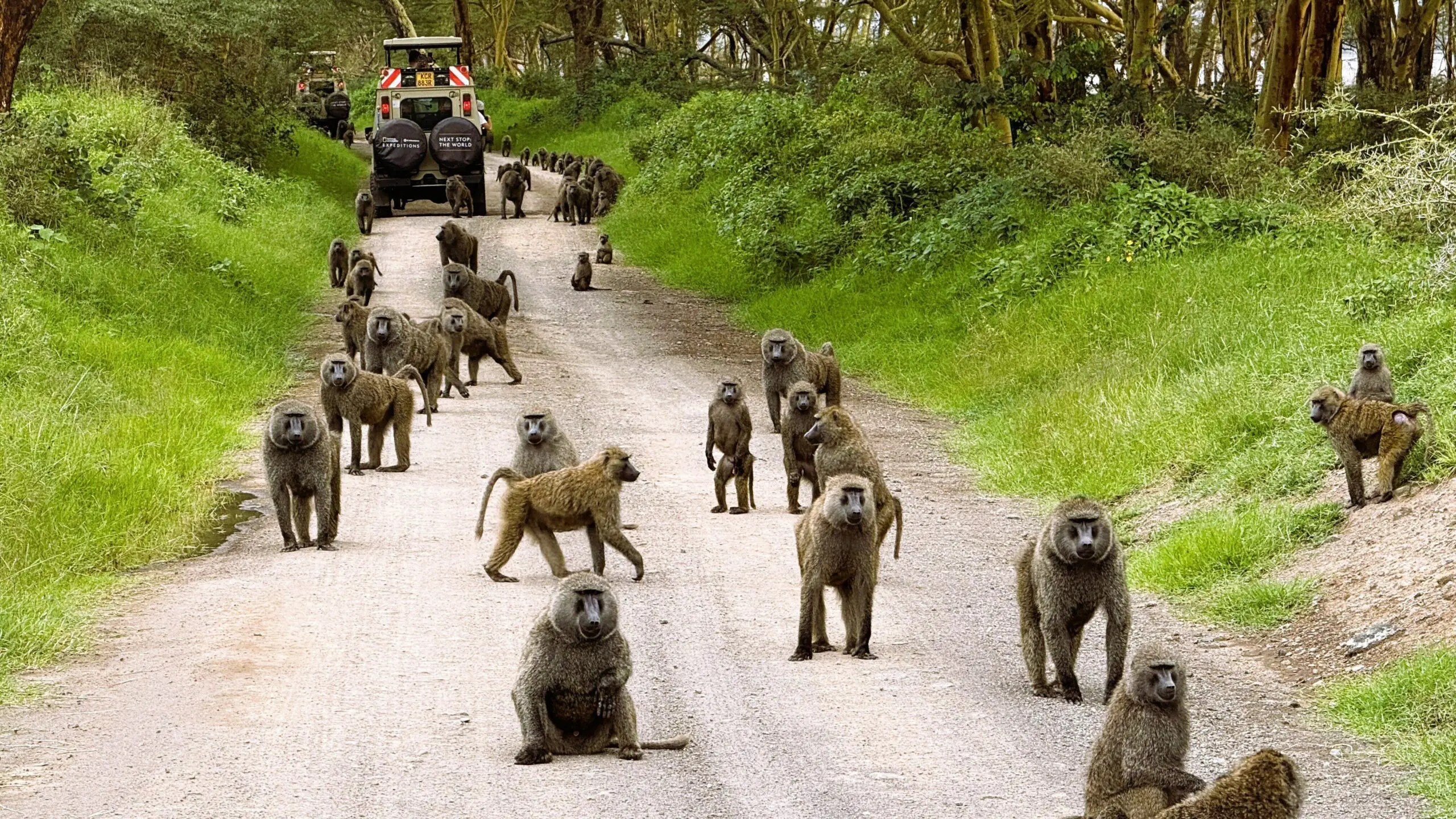
During our first safari game drive, we spotted olive baboon troops, warthogs, a plethora of birds, and three adult female lions nursing a litter of five cubs.
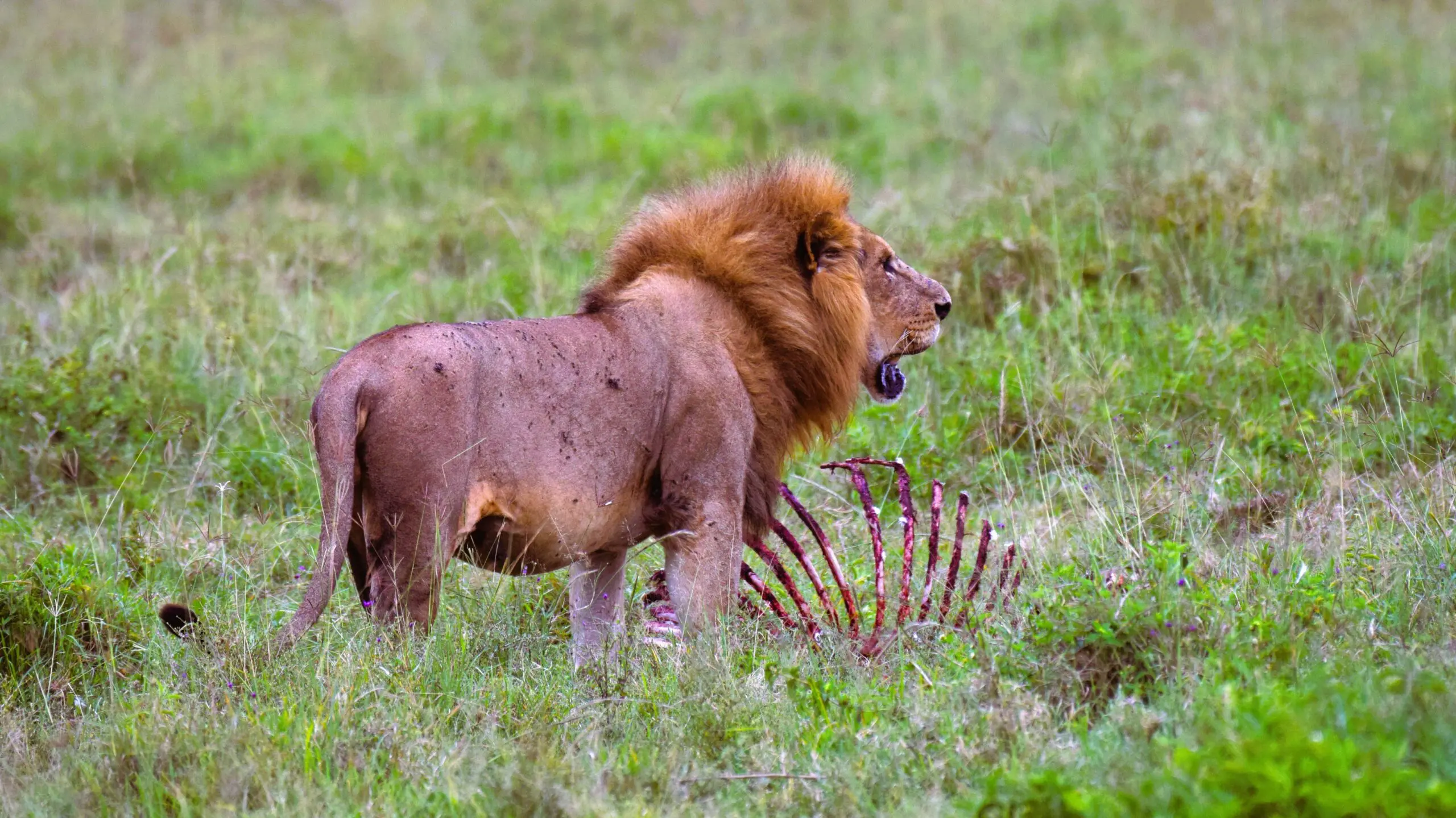
We spotted a rhino in the far distance and witnessed two hyenas tugging at a zebra carcass. Out of nowhere, a male lion drove the hyenas away and made it known just whose prize this was (even though one made off with a zebra leg).
If this was just our first game drive, what else did this week-long safari have in store for us? We returned to our game drive, had dinner, and crashed in our beds.
Day two at Lake Nakuru included a morning safari drive at 7:00 a.m. and a late afternoon excursion at 4:00 p.m. In the morning, we headed to Pelican Point and gazed upon the multitude of pelicans, herons, storks, flamingos, and other birds.
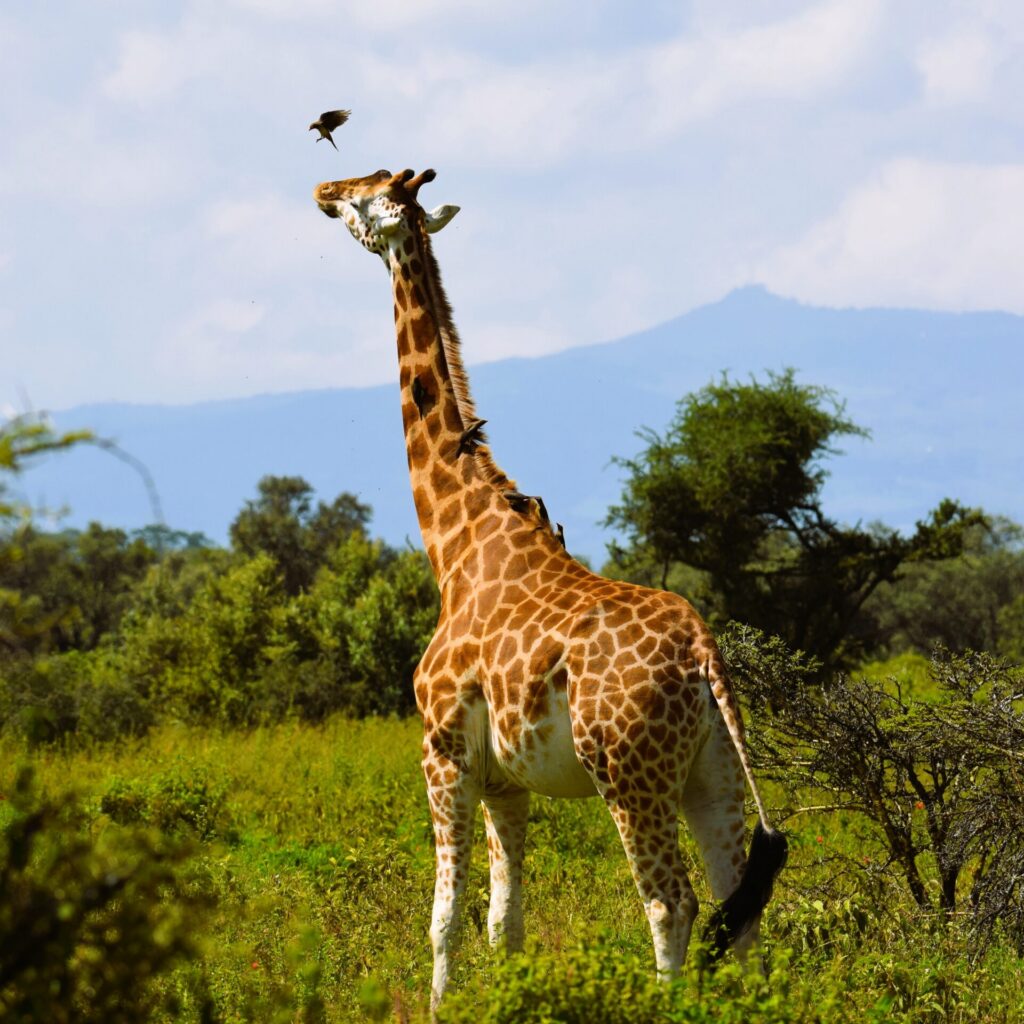
You never knew what you would come across on the drive. While the morning was focused on birds, we also came across a family of endangered Rothschild’s giraffes.
During the afternoon, our guides drove us to Makalia Falls, and on our way back from the waterfall, we had our best view of both black and white rhinos.
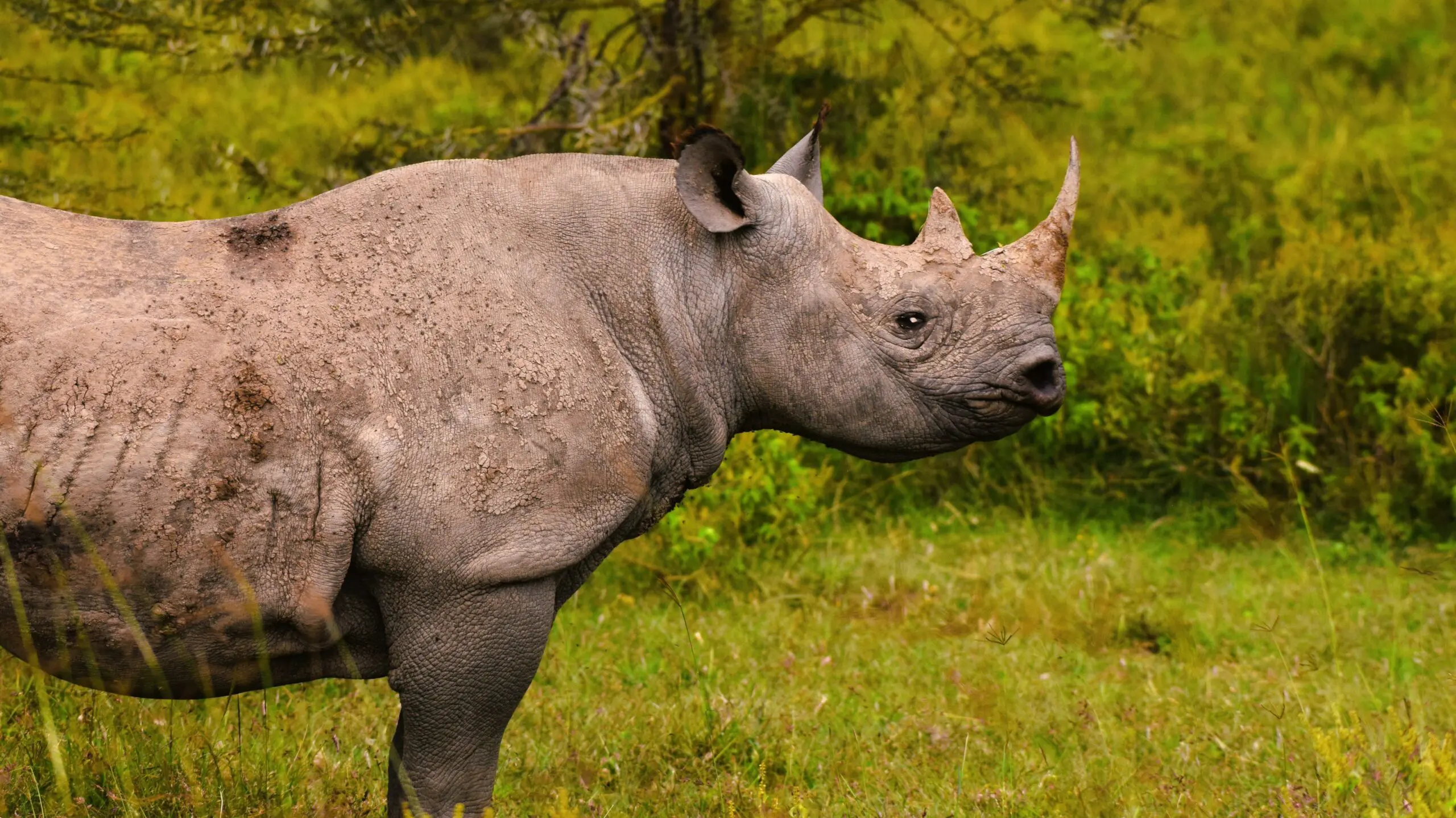
It was clear from the start that National Geographic Journeys with G Adventures is all about education and learning. As other safari vehicles stopped for photos, and then zipped away, we lingered, taking time to observe the wildlife and learn from our guides.
Lake Naivasha
After Lake Nakuru National Park, our next safari lodge was at Lake Naivasha. Our itinerary was altered somewhat due to nationwide protests over fuel prices, so instead of a boat ride on the lake, we took a nature walk to the top of a bluff with expansive views of the area.
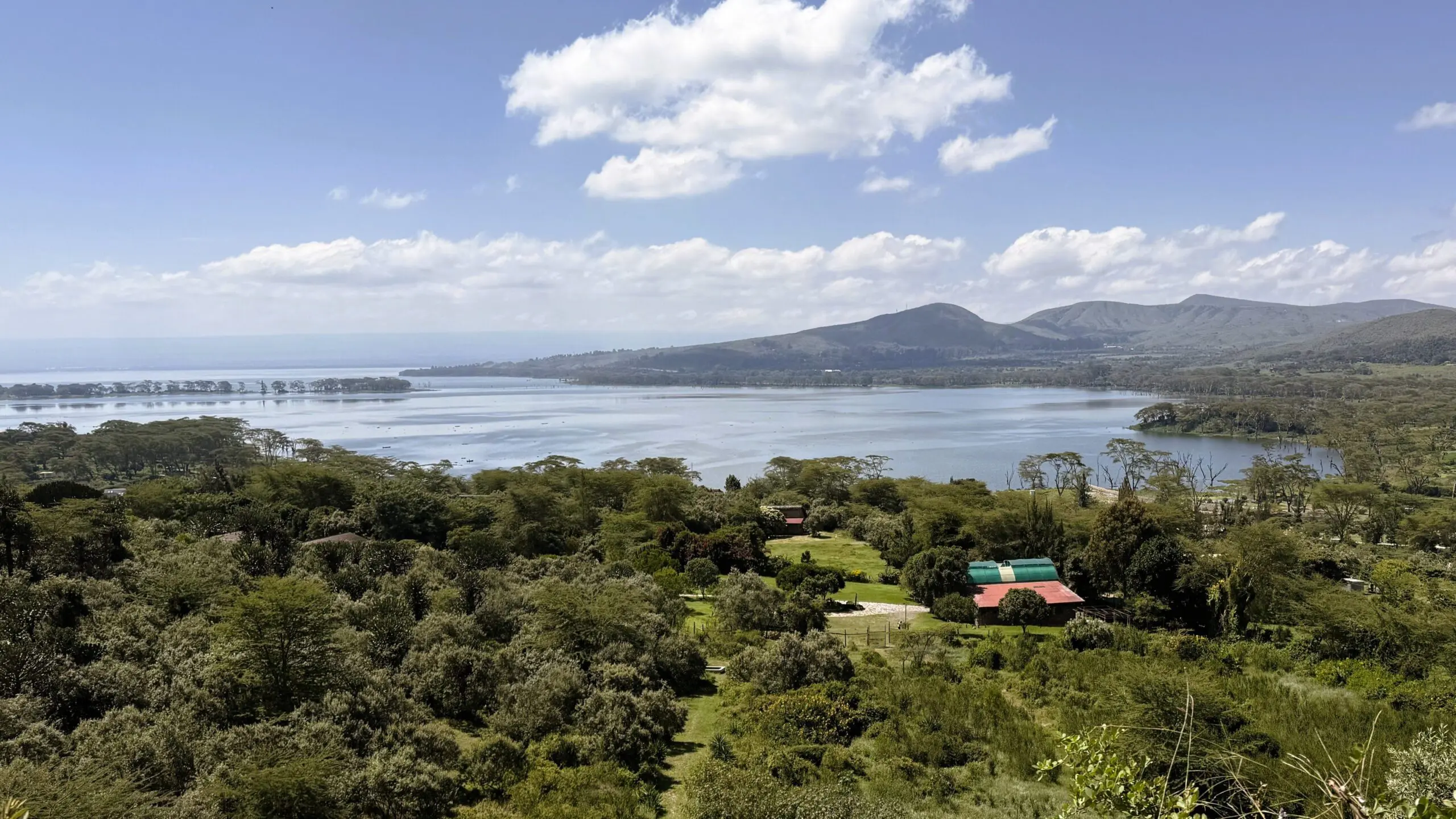
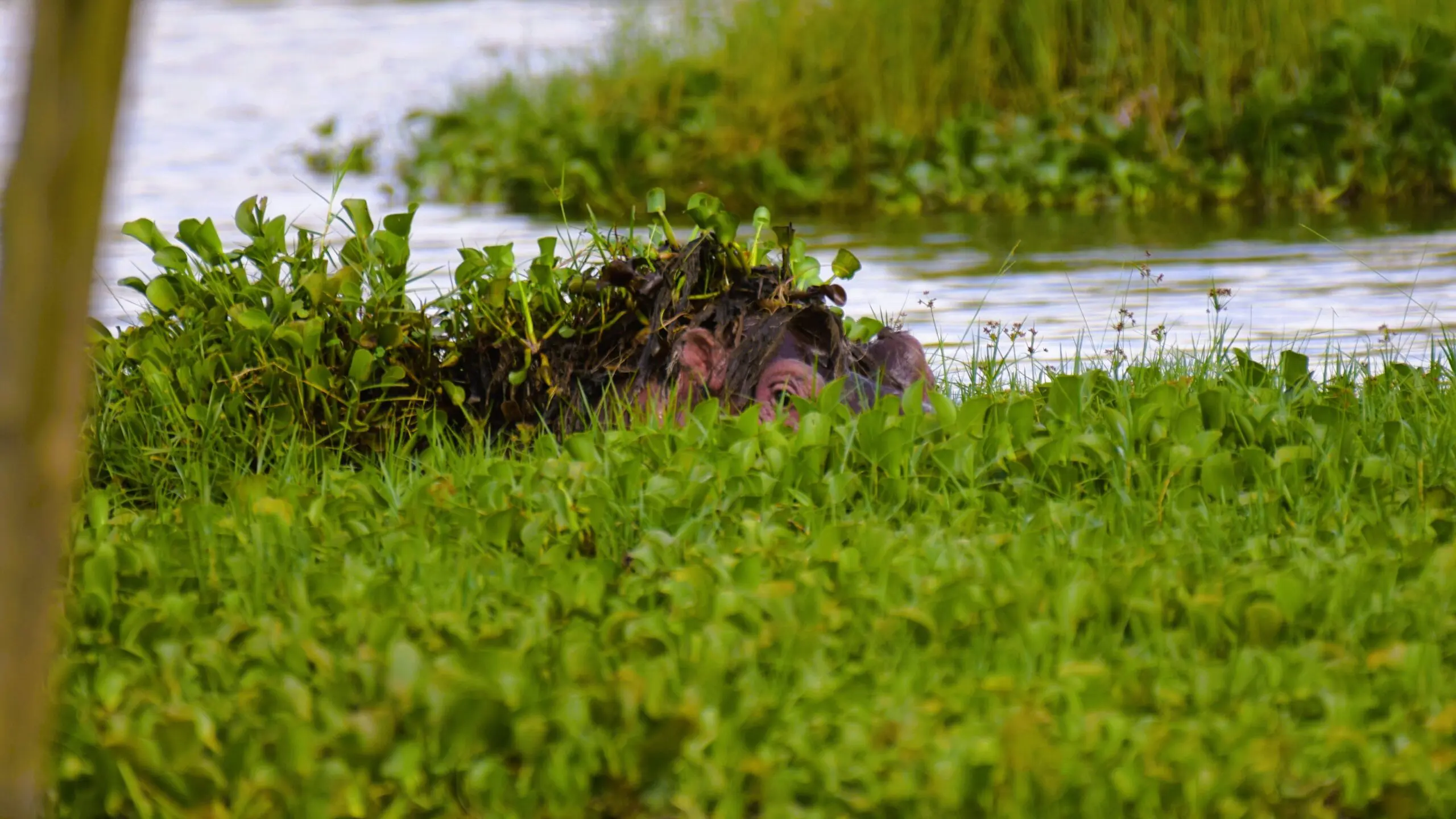
After a hearty lunch, we walked down to the lake for our first glimpse of a hippopotamus who played peek-a-boo among the floating leaves.
In line with National Geographic’s mission to educate and protect the world, a ranger from the Kenya Wildlife Service met with our group ahead of dinner. Ranger Robert Kisara gave a lecture on how poaching continues to impact wildlife populations today.
This stop at Lake Naivasha was a more relaxed day that allowed our group time to rest and recover from travel and the initial pace of the safari.
Masai Mara National Reserve
From Lake Naivasha we drove nearly six hours to the Masai Mara, and this was the destination on the itinerary I was most excited about. A lifetime of flipping through Nat Geo magazines and watching countless TV specials on the Great Migration had me eager to visit this wildlife mecca. It did not disappoint. As soon as we rolled through the gates, we were greeted with herds of wildebeest and elephants.
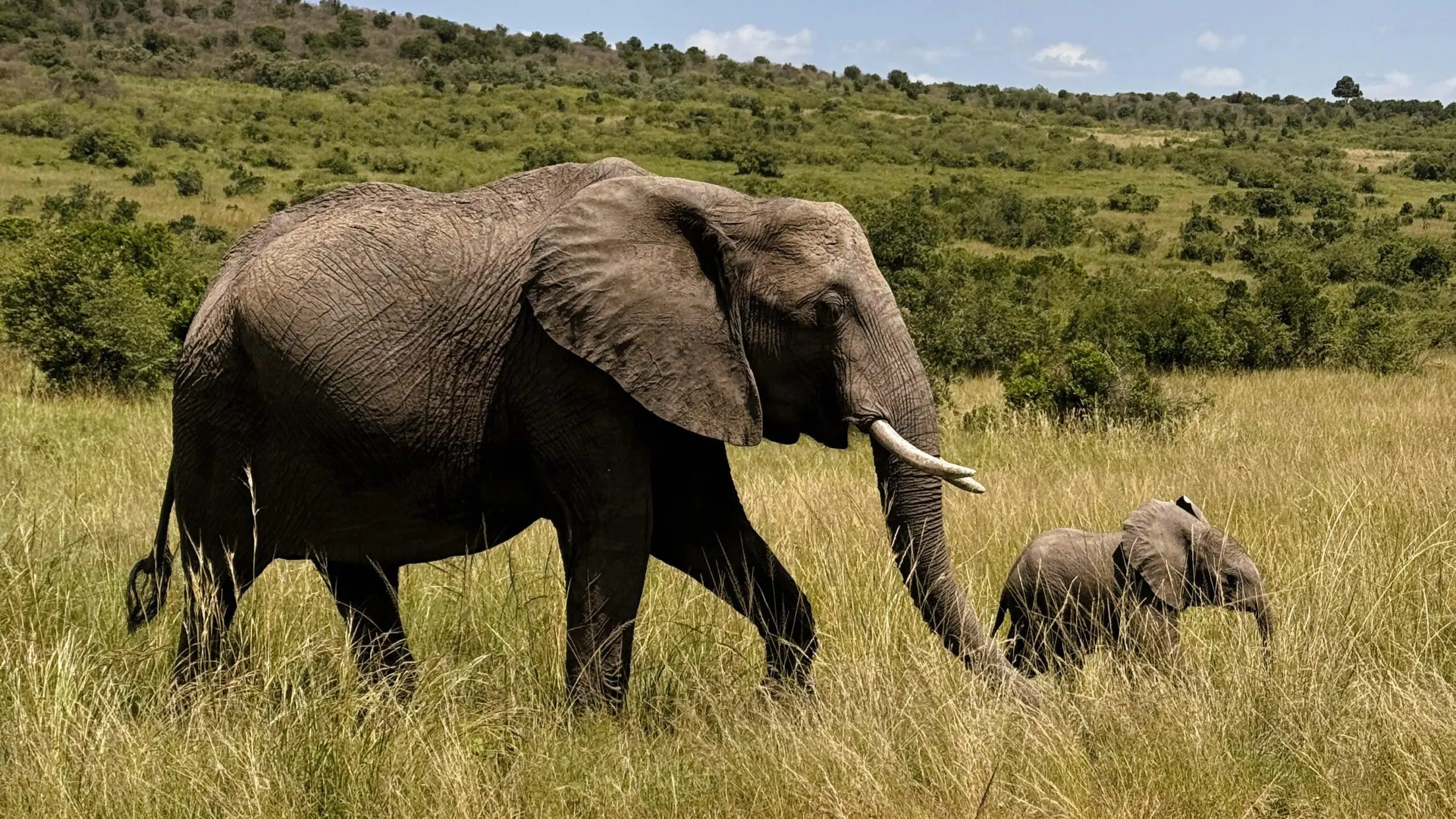
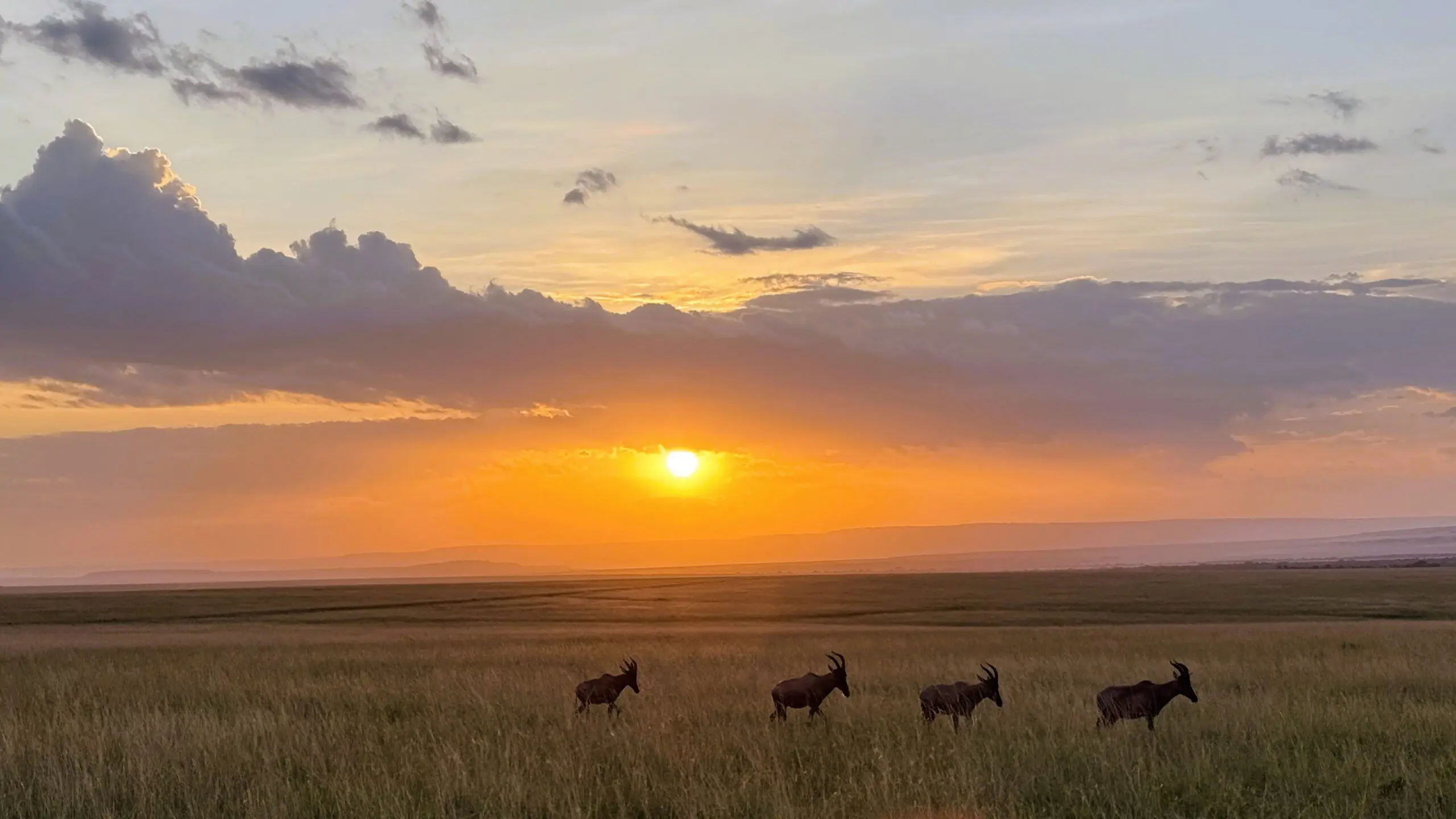
Fig Tree Camp was our base for the next two nights perched on the riverbank. We had three safari drives total in the Masai Mara, and each was noteworthy. Dramatic skies, sunsets, more elephants, hippo, hyena, cheetah, and a pride of 11 lions left me in awe.
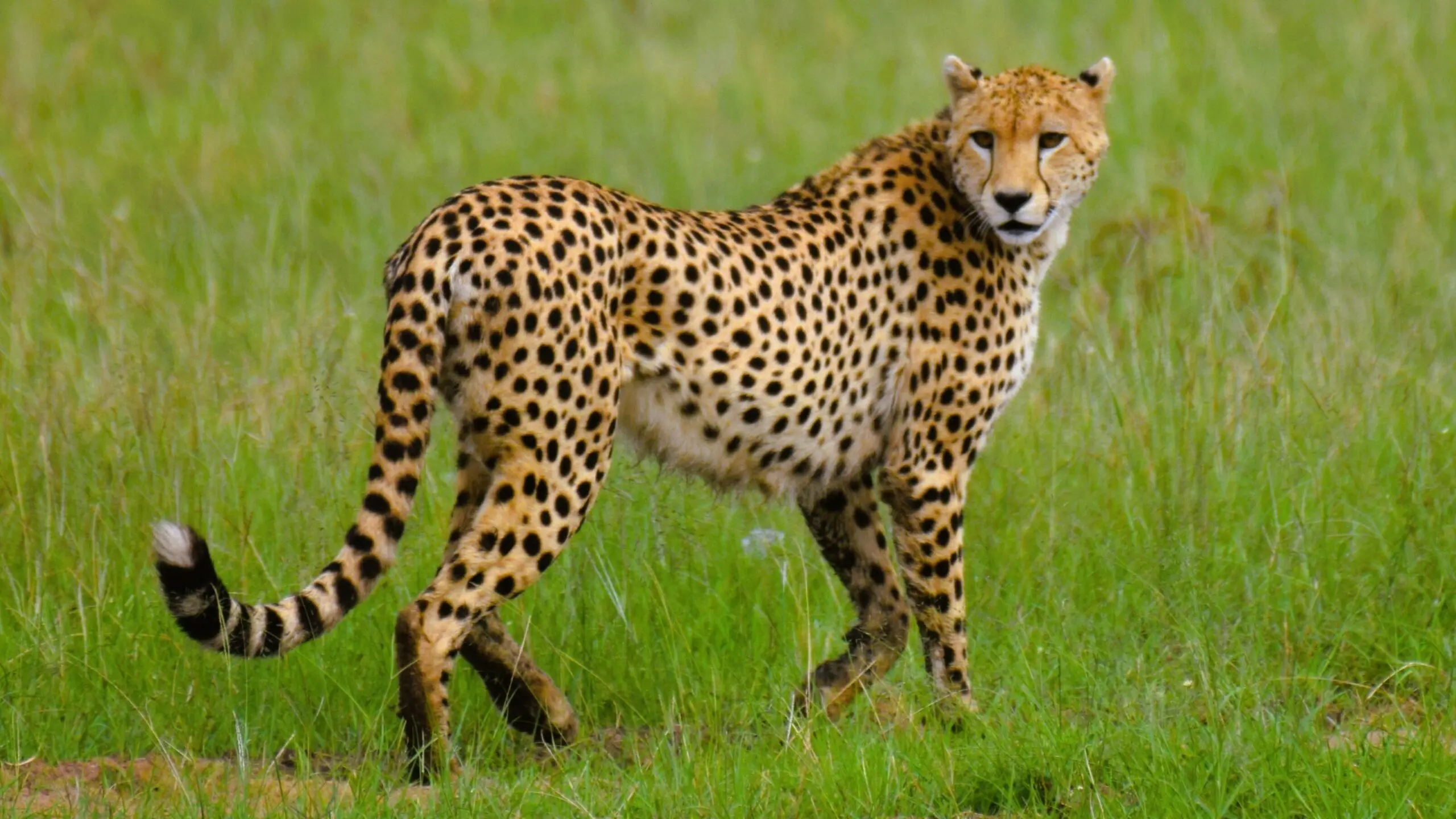
A sense of calm came over me as I gazed out over the savannah, and I could have watched the scene play out forever. We extended each drive as long as we could, and I still could have spent more time observing. Alas, after five full days our safari drives were over.
Café Ubuntu
As we returned to Nairobi, we made one last stop en route at Café Ubuntu, a place for lunch and opportunity to purchase gifts, but with deep roots in the community and a powerful social mission. It’s also a wellness center taking care of children with special needs such as autism, epilepsy, and other forms of neurodiversity.
The center not only provides therapy for the children, but also offers full-time jobs for the parents. What started as nine women learning how to machine sew has grown to 200 employees making products sold to visitors from around the world.
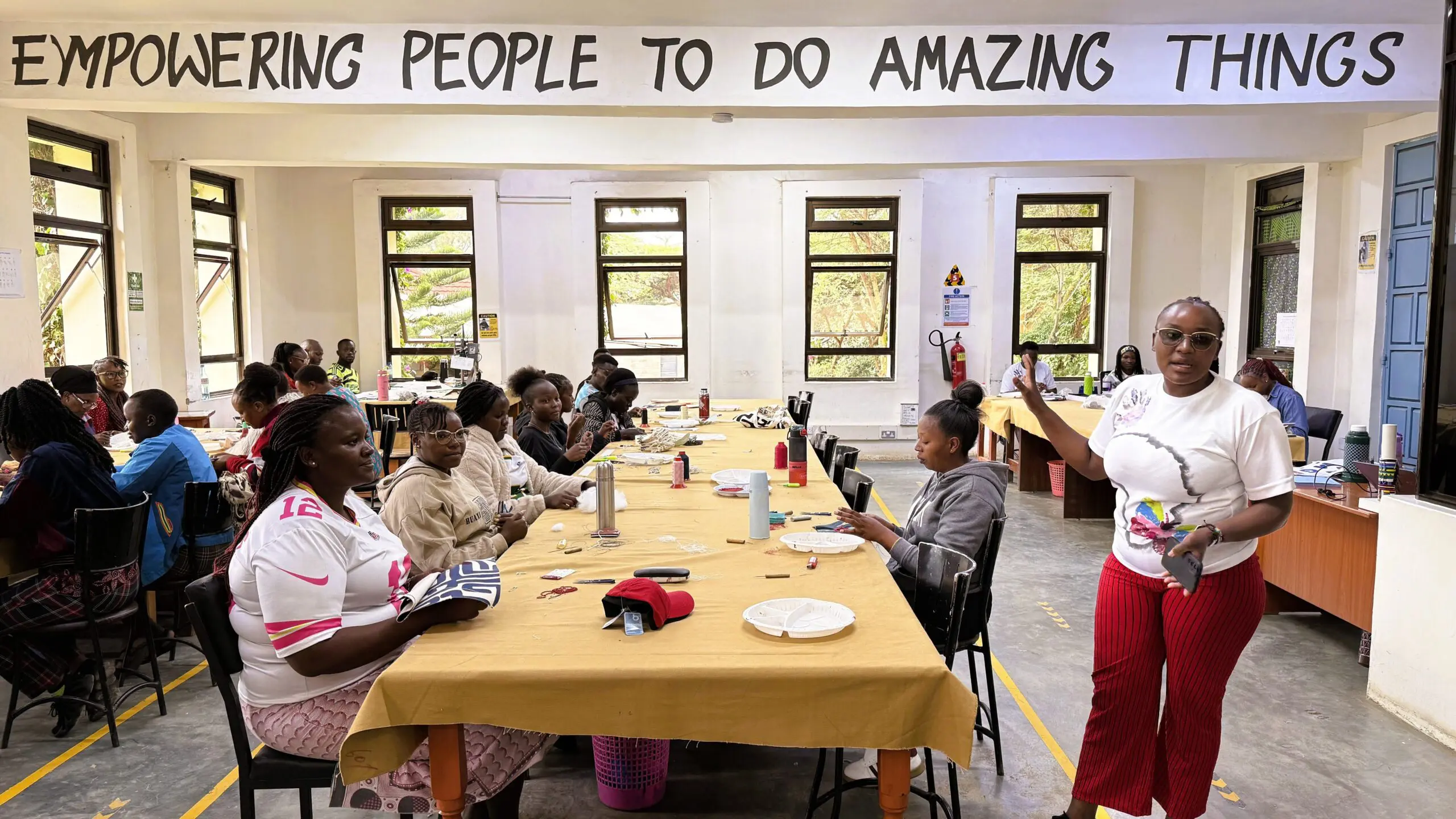
The café and business supports the wellness center and sustains the children and community, embracing “Ubuntu,” the African philosophy “I am because we are.” We are interconnected and depend on each other in order to reach our full potential, and it is our duty as a society to help others achieve theirs. A fitting way to wrap-up our week in Kenya.
Is the safari appropriate for families?
Absolutely, given a few caveats. The Kenya safari is best suited for children over age 12. Kids (and adults for that matter) will need to handle a long flight to Kenya as well as early wakeups for morning safari drives, often before dawn. Everyone should be prepared to spend hours in the safari vehicle as game drives are typically three hours (or more), and it could be as many as six hours between destinations.
Finally, this is not an inexpensive trip, and current pricing is around $6,700/person for summer 2027. That price includes nearly everything (accommodation, meals, transportation, and park entrance fees) except flights and gratuities.
My takeaway from the National Geographic Journeys with G Adventures Kenya safari
The word transformational gets thrown around a great deal, but the National Geographic Journeys with G Adventures Kenya safari lived up to it. Yes, the animal sightings were truly remarkable. During each game drive, every day, there was something unexpected and astounding that will stick with me forever.
What I didn’t predict were the connections made with the people along the way. Our guides, drivers, and fellow guests developed tight bonds due to this shared experience. In addition to the wildlife sightings that exceeded every childhood dream I had, I came away with a group of friends I will long treasure.