
I taught swim lessons for a long time, which was a natural high school job for a kid already at the pool for multiple hours a day in the summer for practice. Now, seeing my own toddler plop down on the stairs with their bubble on makes it feel like time is collapsing. Shouldn’t I be in the water right now? Shouldn’t I be punching in upstairs?
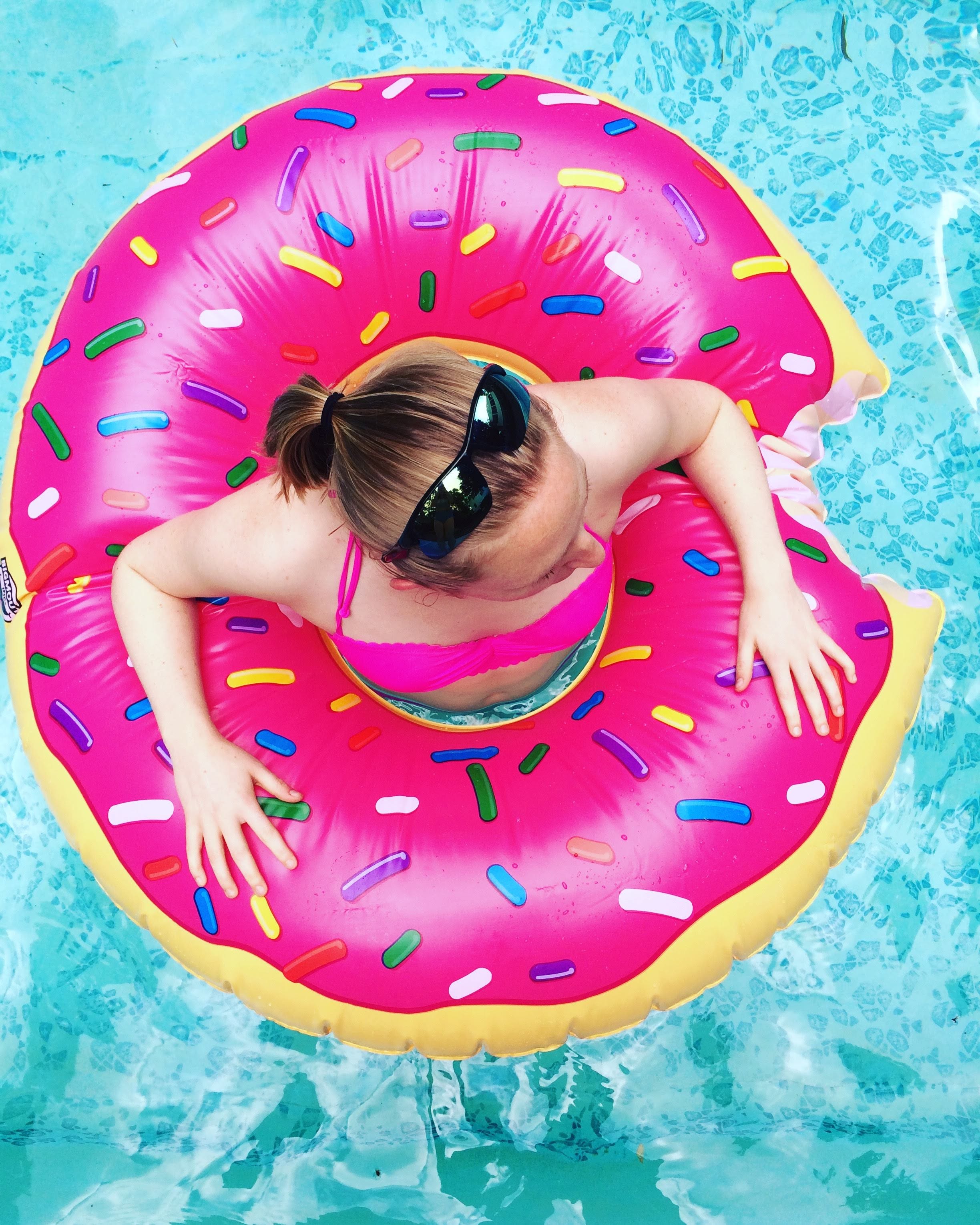
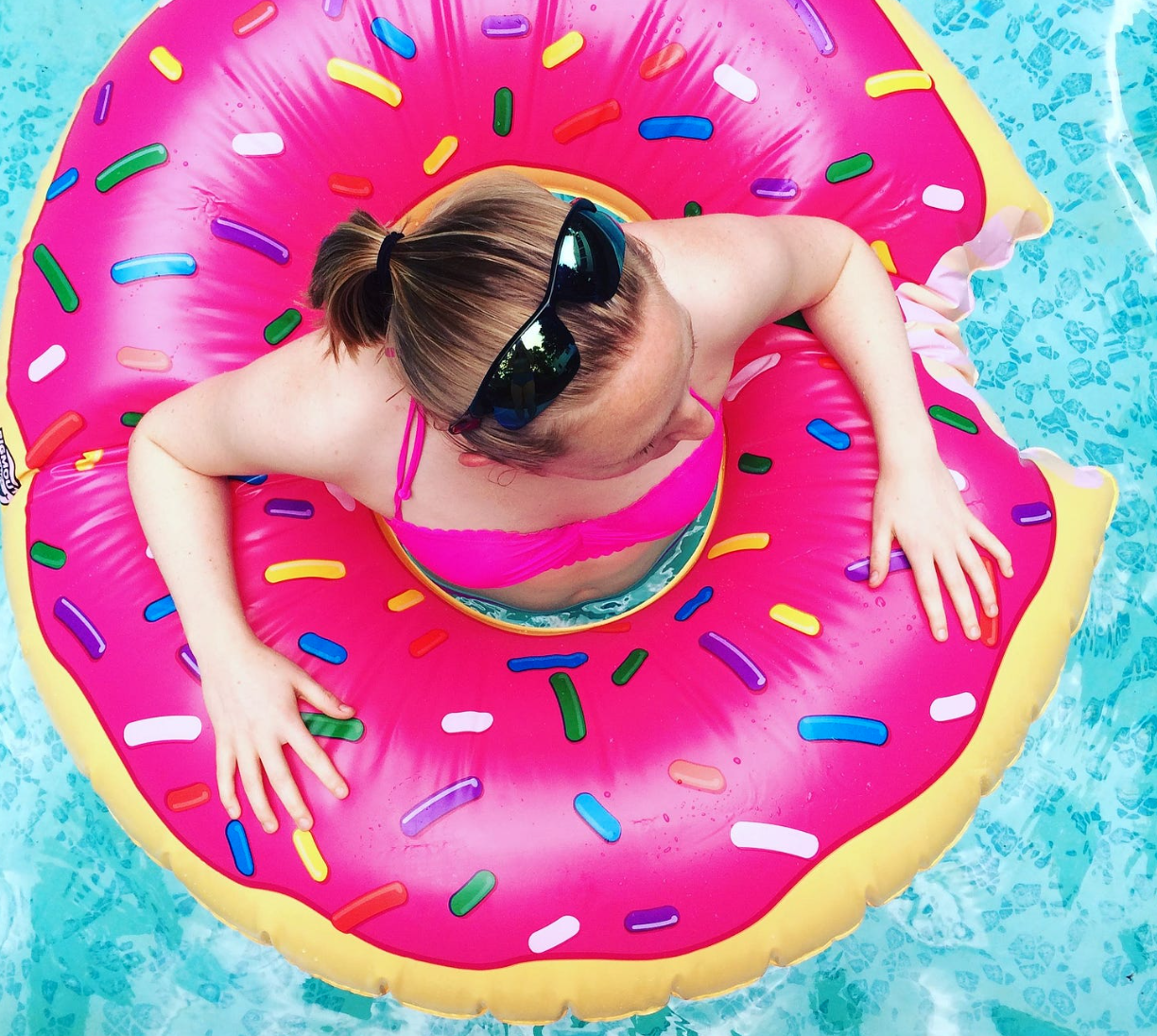
Pool time is a non-negotiable for me every summer, because I am part mermaid.
For me, summer is the most fun because: Pool time. Whether you are members at your local YMCA or have a pool in your backyard, it’s my all-time favorite summer activity and an essential part of any vacation. But I see parents get it wrong all the time, trying to rush their toddlers out of bubbles. For me, the most important thing wherever you go is to be SAFE first and FUN second.1
Travel with Toddlers is a reader-supported publication. To receive new posts and support my work, consider becoming a free or paid subscriber.
Water safety makes it easier for you to relax.
A few weeks ago, a note of mine really resonated with my followers. I wrote it after chatting with some of the other parents at swim lessons and family swim, because I take it for granted knowing these things from growing up as a swimmer. Some of these tips really are life-saving, and I’ll go over some of the most important ones here. (Don’t worry, there will be fun and games later.)
First, and most importantly: GET IN THE WATER. Mainly because it’s way more fun! If you’re having trouble with that, Immensely Dramatic wrote a great piece on it here.
90% of my saves as a lifeguard were little kids who figured out how to get out of their bubbles. The parent? Almost all of the time, they’re yapping on the steps or scrolling on their phones, not watching their toddler get closer to the deep end…and then would get upset that I “scared their toddler” when I saved their life. SMH. Please, be present with your kids. Play with them, have fun with them, get in the water. If your kid can’t swim, you must be in the water, an arm’s reach away.
The rest of these tips really come down to following the pool rules, basically.
- Remember, your kid doesn’t know basic water safety. They don’t know to walk around a pool because they might slip. It’s your job to tell them to WALK! The ability to listen and wait is much more important than whether or not they can kick or put their face in at this age, honestly.
- Use the lifeguards/the pool rule sign. Once your toddler sees the lifeguard use their whistle for the first time, they’ll understand the chain of command. But until then, explain that lifeguards are helpers just like police and firefighters, and it’s their job to keep you safe, so if they have a rule, you have to follow it. Read the rules and show them the safety equipment. Toddlers looooove safety stuff.
- Lifeguards keep the pool safe by something very simple: Counting. If you’re having a pool party or have a lot of kids over, designate one adult to be the lifeguard, and rotate every 10 minutes just like a real one would. Count the kids in the pool. Count ‘em again. Know who gets in or out at all times. (Or better yet, hire a lifeguard for a party that has a lot of people so you can relax. Give a high schooler a little college money!)
- The “wait 20 minutes before you get in after eating” idea is really a myth, but I think with a toddler, it’s important to set boundaries around eating and the water, especially if you’re hanging out at home. You do not want them finishing off some crackers while jumping in, trust me. Dry them off completely for snack time, and if there’s a grassy area, eat there instead of on deck. For adults or for babies, no glass bottles allowed.
- Swim diapers don’t filter out pee! Pass it on to a new mom!
- Even if you think your kid is out of a bubble, bring one. So many parents have ego about this, like if they’re out of a bubble their kid is safe. It’s those kids that were the scariest for me as a guard, because the parents are like, “they can swim” and so don’t watch them, and as soon as they get tired, they sink. But of course, they don’t WANT the bubble because they don’t need it…so. Bring it anyway, use it anytime it’s crowded, or if you want to swim for more than 30 minutes at a time, and just because they can doesn’t mean they can for an entire day at the pool.
- Slightly spicy take, but I think ISR (the type of swim lessons that use no flotation, where you throw the baby in the water) doesn’t work and is unnecessarily cruel. The reason I think it doesn’t work is exactly because of point #6 — it lulls parents into a false sense of security. Could it work for you? Certainly, you do you. But remember: ISR is like carrying around a first aid kit. It’s great for emergencies but not for everyday. Your kid will need to be in swim lessons WAY longer than you think, because in the same way they forget reading and math every summer, they forget how to swim every winter. Like, until they are 8 or 9. They don’t have to do swim team, but they should take lessons until they can confidently swim 25 yards without stopping, know how to float on their back, and tread water.
- Buy super neon, super bright colored suits. No blue!! You won’t catch my toddler in anything but orange, hot pink, red, or neon yellow because I want to always see them in the water, and I want the lifeguard to see them, too. As a bonus, it means I can always keep track of them at a splash pad or other crowded place.2
- For slightly older kids: Don’t let them fight with noodles, and don’t let them sit or stand on kickboards. Teach them safe horseplay meaning: NEVER hold someone’s head underwater. There are so many games they can play! Funnel that energy into fishie fishie, cross my ocean or Marco Polo or stick in the mud. Literally anything!!
- And my personal favorite: Have a ritual that helps you get in and out of the water. We do a high five on belay/belay on situation so there’s no surprises. You should always be first in the water.
My favorite water games for lots of giggles.
Swimming should be fun for little kids. If all they want to do is jump in over and over again, let them! As long as they’re using walking feet and putting their toes on the edge, obviously. I just mean, all you do in swim lessons at this age is play games, so don’t worry about not “practicing” with your kiddos just yet. Making swimming fun is the best thing you can do right now, because you’re secretly working on so much:
- Toss a pool toy and go get it. If they won’t pull their arms out of the water, hold the toy at arm’s length in front of one arm, then the other, and tell them to reeeeaaach like a rainbow. Upgrade to jumping in and grabbing the toy! Learning how to use their arms to move themselves forward and/or recover from jumping in/falling in.
- Kick a toy away. Depending on their size, sit them on the side of the pool and then put the pool toy on their feet. Have them kick it as far away as they can! The more splashes the better. Learning how to kick.
- Help me grow. With a mini watering can, drop down in the water. Have them pour the water on your head and pretend to grow like a flower. Then switch. Getting comfortable with water in face/eyes.
- Go fishing. Sit on the stairs and sing a little sea shanty with a pool noodle, wishing for a fish. When your toddler grabs on to the noodle, yank it in quick, to lots of giggles. Then switch. Splashes and forward momentum.
- Pancake flip. Some kids hate being on their backs and some love it, but this game can help. Put your child’s head on your shoulder and drop down into the water so they’re “floating.” Then pretend they’re a pancake, and flip them over onto their front and back again. Practicing floating on your back, which is a safety position.
- Motorboat. As they blow bubbles into the water (the “motor”) zoom them on the surface fast or slow. They can do this holding on to a noodle as well. Practicing blowing bubbles, which is the foundation for breathing patterns.
- Listen to the fishies. This gets them practicing head position. On the stairs, have them face the water, then dip their ears in one at a time to listen to the fishies. Have them “talk back” by blowing bubbles. Practicing proper head position and blowing bubbles.
And of course, you can dazzle your toddler with handstands, swimming under their legs, cannonball contests, or whipping out your best butterfly. It doesn’t have to be fully “on” if it’s fun!
The hardest part of the pool outing is the locker room.
When I first started taking my now-toddler to swim lessons, I dreaded the lessons ending. Rushing from the pool to the locker room, fighting for a changing room or table with all the other parents, how slippery they are (!!) and of course, every single kid was crying every time. Here is what I figured out to make it go more smoothly:
- Babies and toddlers need to take a shower right away to wash the chlorine off. Practice showering at home while holding them if they’re not comfortable, and most importantly, leave their water shoes or sandals ON for the shower. (Babies under 6 months should not go in the pool at all.)
- Some pools have inclusive/parent locker rooms—these are much more likely to have changing stations and other amenities you will need with a baby or toddler, so don’t take them into the proper locker rooms unless you have to.
- Bring a toy for changing a baby, just as you would normally. I also bought a bunch of terrycloth onesies which were easier to slide on to their slippery body. Now for a toddler it’s easier, also because one of my mom friends taught me to use a bath robe instead of a cover-up and wow, life changed.
- Bring more towels than you think! I usually bring 2 towels per person, so that I can wrap ‘em up during snack or lunch time and then use that to stand on when it’s time to get changed and go home.
- For me, I usually don’t shower. I get the toddler all changed first, sit them down on one of the benches in the locker room with a snack or toy, and then change as fast as I can. In the summer I just throw my sweatpants on over my suit and call it a day.
- I finally found a pool that has family swim at the same time as swim lessons, which means after lessons we can go over and play! It’s such a nice reward to be able to let my toddler jump and play the way they want after listening for so long. Look for that!
- I always pack a lunch or substantial snack for after lessons. Swimming burns more calories than almost any other exercise and if you’ve ever witnessed a toddler jump into the pool about a thousand million times, you know they are t i r e d afterwards. For the same reason, I don’t recommend scheduling anything else on a swim lesson day.3
Finally, and this is my hottest take of all: Walk away from swim lessons if you’re allowed to. Don’t watch, or find a way to watch from afar (for example, if the pool has a viewing window or stadium seating. I swim laps during my toddler’s lesson so I can secretly watch while I slack off!) It was always the advice we gave parents when I was a teacher, especially for the kids that looooove to say “Momomommom lookatme!” and by doing so, start to drown. 😂
This is actually even more true for kids having a hard time. As soon as you leave, authority transfers to the swim teacher. Until then, they know that they can cry and you’ll be there to comfort them because they’re doing something hard and scary! Obviously, you know your kid best, and if you haven’t put them in daycare or school, this isn’t as easy. But if they’re still struggling, talk to the swim teacher about it and see what they think. The crying kids I’d usually rip away from their parents and distract them by making them the co-teacher. Soon enough they’d be splashing away just fine while the parent or caregiver got to go get a coffee and relax.
Pool time gear to have fun (and be safe)
First, you need a bubble. This is by weight, so for babies, your only option is a lifejacket or to hold them (sorry!) TLDR; check the weight on anything you buy and make sure your child matches, and also if you pick a different life jacket, make sure that it is clearly marked U.S. Coast Guard Certified.
- If they are more than 30 pounds you can do a puddle jumper like this. This does NOT help teach them to swim, but it’s great just for playing.
- If you want a bubble that will still encourage proper body position (and effort) in the water, I prefer this option, but it’s considered kinda old-fashioned.
- This is the one everybody has, I think it’s not quite as good but certainly will do the job (and if you take lessons with floatation or go to a local pool, this is certainly the one they will have.)
- Bath toys are pool toys! These duckies, these balls, and these boats are our favorites.
- Swim diapers, if you need them.
One thing NOT to buy: Do not buy one of those floating contraptions that have a little canopy. They’re not safe to use and they give you a false sense of security. Ditto for inflatable water wings of any kind.
Thanks for being here.
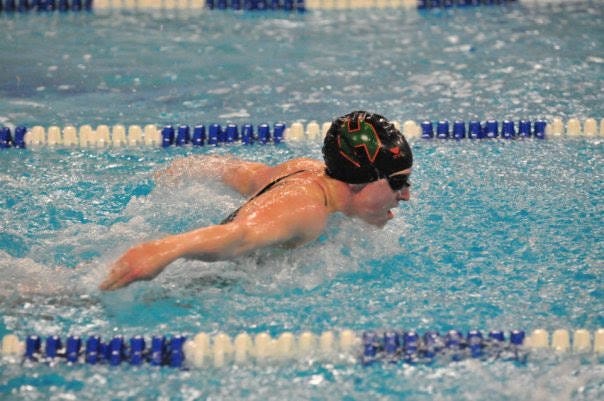
A moment for my high school glory days, and a shoulder that would move properly.
One thing I want to reiterate: Just because I was a college swimmer, and a swim teacher, doesn’t mean my toddler is “ahead.” They’re still in Level 1 and in a bubble, which is right where they belong at this age! It’s more important to me that swimming stays fun than if they’re in Level 2, even though I think they’d probably handle it just fine if I pushed.
And years ago, I put them in the baby-and-me lessons because I wanted to do them, not because they add value or speed up learning. It certainly made them more comfortable in the water, but just know what they learn at 9 months will not translate later…it’s just for fun. It’s basically a singing/storytime in the water anyway.
The point is, let swimming be fun. If you’re on vacation, don’t worry about practicing or doing it “right.” Put them in lessons, yes, if you can, especially in the spring leading up to the summer, so it’s fresh as you add this kind of outing in.
But it’s really okay if your toddler doesn’t want to get in the water. Or if they are afraid to jump in. Or if they refuse to put their face in. I, famously, according to my mother, would be handed off to my swim teacher screaming…and then I swam competitively until I was 22. So there you go.
Just keep swimming,
Kayla
If you liked this post, please consider supporting my work. I’m just a mom in the thick of the toddler years trying to create core memories for our whole family while minimizing meltdowns—I sincerely hope this helps you do the same.
This post was originally published on Travel with Toddlers. Subscribe for more real-talk travel advice, toddler-friendly itineraries, and tried-and-true gear recommendations.